The Best AI for Your Business Won't Know Everything. It Will Know Your Business.
ChatGPT already knows plumbing. Home Depot built an AI that knows Home Depot. A service business needs an assistant that knows the customer, the job, and the rules.
 The FrontSail AI team6 min read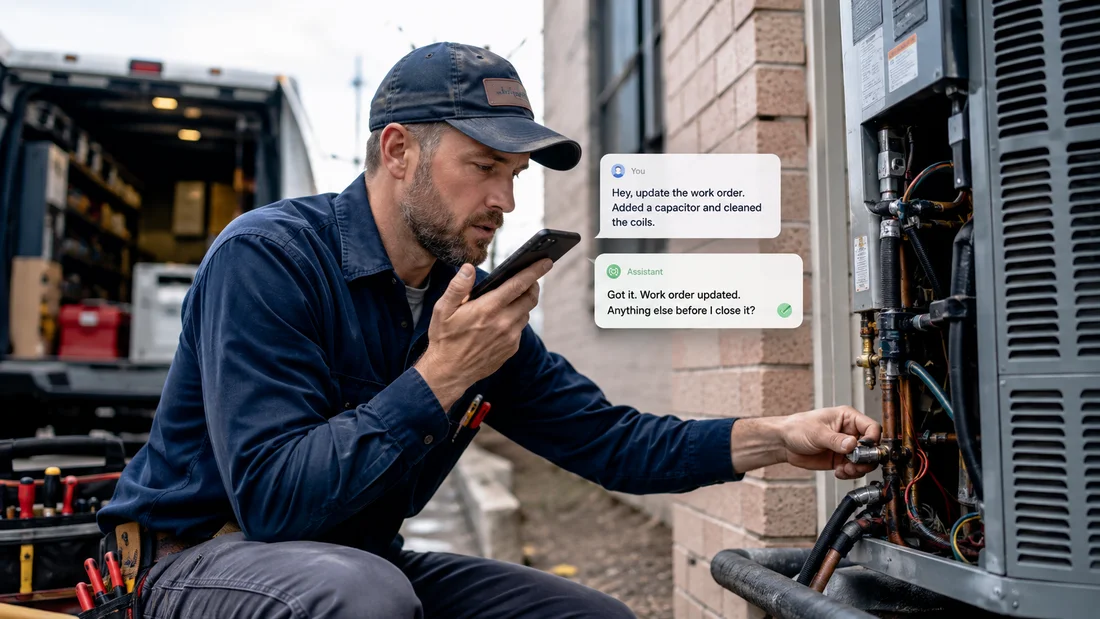
A contractor is standing in Home Depot holding a fitting that looks as if it was designed specifically to ruin his afternoon.
He can ask ChatGPT what it is. He may get a good explanation, a few likely sizes, and a polite reminder to shut off the water before turning the basement into an indoor pool.
Home Depot’s Magic Apron can do something more useful. Customers can ask questions by text or voice, upload a photo, check local inventory, and find the exact aisle and bay. Home Depot has now rolled it out across more than 2,000 U.S. stores. For professional customers, its Material List Builder can turn a project description into an editable list connected to Home Depot’s catalogue, preferred pricing, and current inventory.
Home Depot did not win by building an AI that knows everything.
It built one that knows Home Depot.
The breakthrough is not the chatbot
ChatGPT already knows a remarkable amount about plumbing, roofing, HVAC, and almost everything else. Another chatbot capable of explaining grout is not much of a competitive advantage.
The value begins when the assistant knows the details a general model does not: what this business sells, what is available now, which rules apply, and what should happen next.
That is why Magic Apron is more useful inside Home Depot than a blank chat window. It is connected to the reality of the business.
The same principle applies to service companies, but the job is different.
A homeowner calling an HVAC company usually does not want a twelve-step lesson on replacing a blower motor. He wants to know whether the company serves his area, whether someone can come today, what the diagnostic fee is, and whether the noise coming from the furnace means he should turn it off.
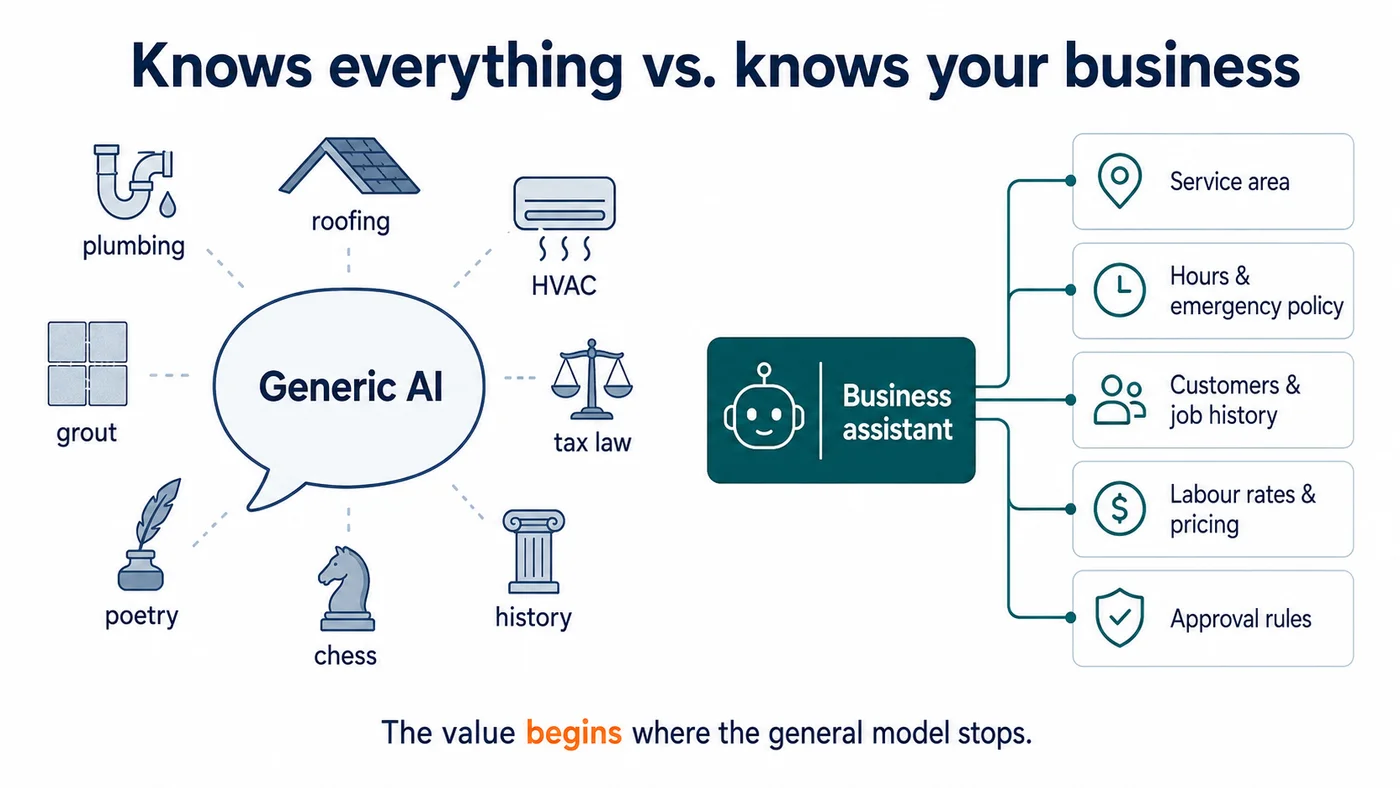
A general model knows a lot about everything. The value begins with what only your business knows.
A generic AI can explain the equipment.
A business assistant should understand the business.
A business assistant follows the job
Imagine a customer calls because the furnace sounds like a washing machine full of cutlery.
The assistant knows the company’s service area, hours, emergency policy, and scheduling rules. It asks the right questions, recognizes an existing customer, captures the equipment details, and books the appropriate visit.
The next day, the technician inspects the unit. Instead of sitting in the van typing a small novel with two thumbs, he records a note:
“Blower motor is failing. Recommend replacement. Customer also wants an optional thermostat quote. About two hours of labour.”
A real business assistant should carry that context forward. It updates the work order, attaches the technician’s notes and photos, and prepares two quote options using the company’s labour rates, markup, warranty terms, and deposit rules.
Then it presents the quote to the owner for review.
The owner adjusts one line, approves it, and the customer receives a professional quote while the details are still fresh.
When the job is finished, the technician says so. The assistant records the work, prepares the invoice, updates the status, and drafts the customer message. If the customer calls later asking what is happening, the front desk does not need to begin an archaeological expedition through texts, notebooks, and the glove compartment.
It already knows.
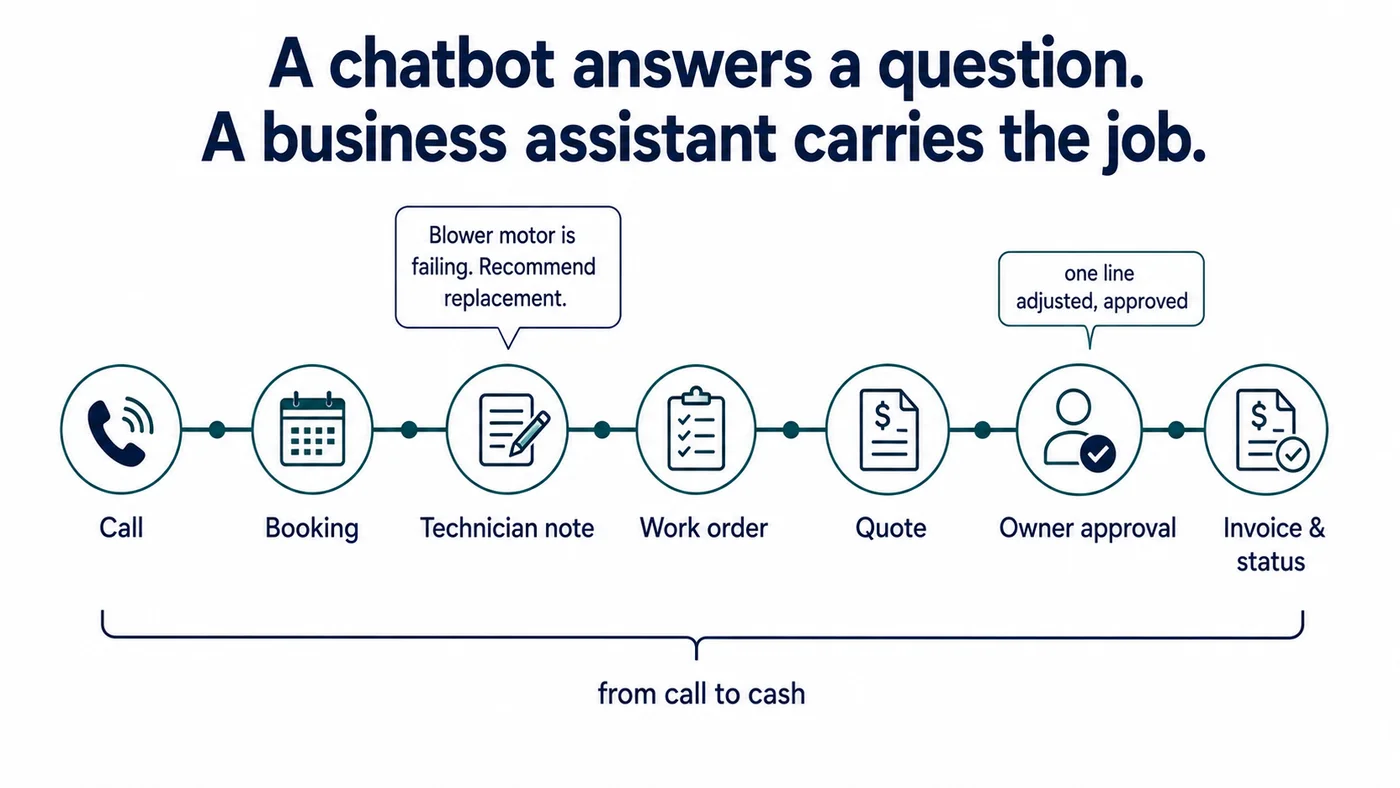
That is the difference between a chatbot and a business assistant. We have written before that the call is over, but the work is not. This is what it looks like when something actually carries the work.
A chatbot answers a question. A business assistant carries the job from call to cash.
It needs rules, not magic
Knowing the business does not mean the assistant should improvise freely.
It should know that standard quotes can be prepared automatically, but unusual discounts require approval. It should know that Mike does not work Fridays, that the company does not service oil furnaces, and that “we’ll be there in fifteen minutes” is a bad promise when the technician is two towns away buying fittings.
Routine work should move without drama. Exceptions should reach a person.
That is more useful than either extreme: an assistant that asks permission before correcting a phone number, or one that issues refunds based on confidence and good vibes.
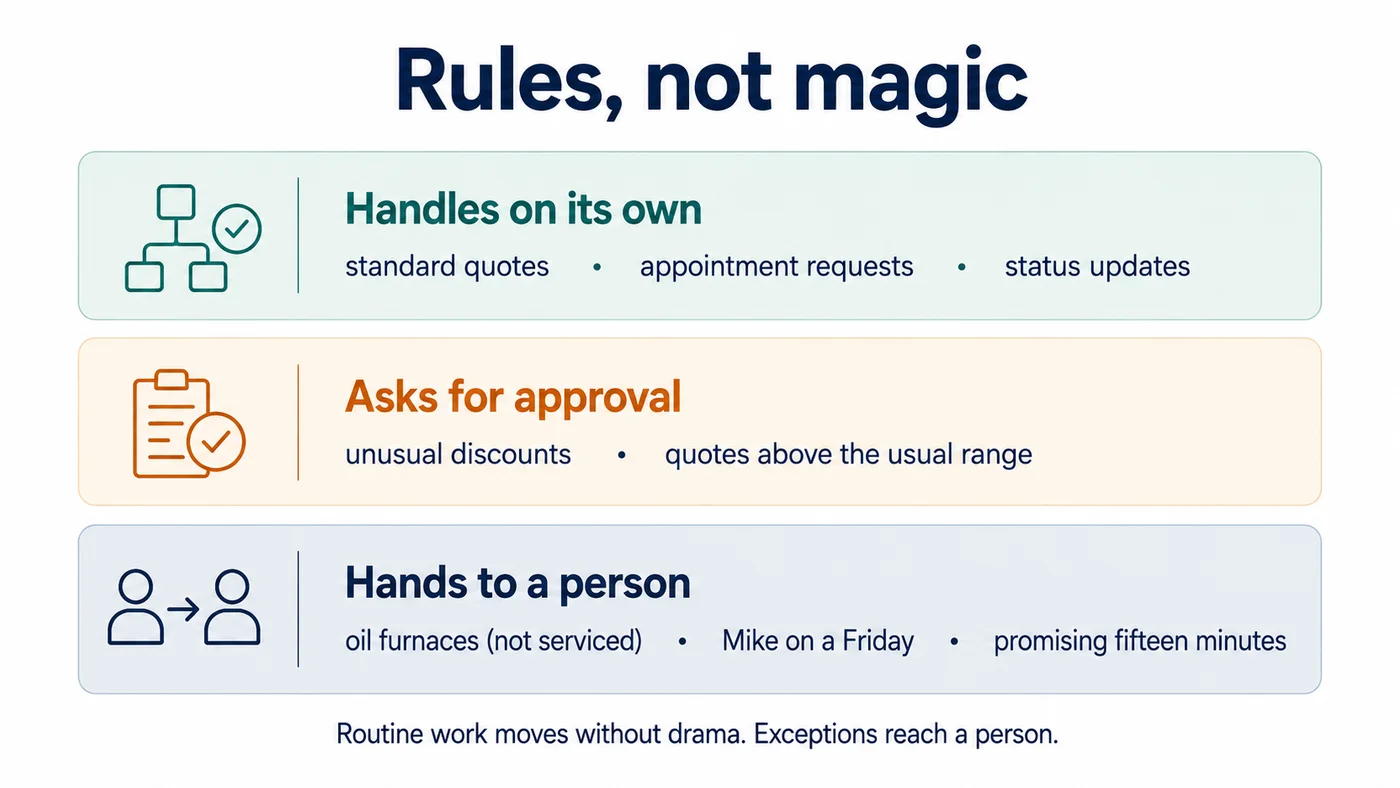
The useful question is not “how smart is it” but “what is it allowed to do on its own.”
The goal is not an AI with unlimited authority.
The goal is an assistant that knows its job. The unit of automation is a responsibility, not a feature.
The front desk is only the beginning
FrontSail AI starts where work enters the business: calls and messages.
The assistant can answer common questions, capture useful intake, manage routine appointment requests, and recognize what the customer needs. But the conversation is not the finished product. It is the beginning of a job.
The larger FrontSail AI vision is an assistant that carries business context through the workflow. It knows the customer, the job, the company’s setup, and the rules. It can help update work orders, prepare quotes and invoices, communicate status, and keep unfinished work visible.
It does not replace every tool the company already uses. It works across them, which today is usually a person’s job.
And it does not need control of the whole business on Monday morning. It starts with a narrow responsibility, proves itself, and earns more.
Knowing everything is overrated
Home Depot’s lesson is not that every contractor needs a DIY advice bot.
It is that AI becomes far more useful when it is connected to the specific business it serves.
Home Depot’s assistant knows which product is available and where to find it.
A contractor’s assistant should know which customer is waiting, what the technician found, what was promised, what the company charges, and what must happen next.
General intelligence is becoming widely available.
Business context, continuity, and the ability to act are what turn it into an assistant.
The best AI for your business will not be the one that knows everything.
It will be the one that knows your business well enough to help run it.
Give your business an assistant that knows it
General intelligence is becoming widely available. Business context, continuity, and the ability to act are what turn it into an assistant.
With FrontSail AI, you can create a virtual Frontdesk assistant that knows your services, your service area, your hours, and your rules. It answers the calls and messages your team cannot, captures useful intake, and keeps the job visible after the conversation ends.
Start with one narrow responsibility. Let it prove itself. Then hand over more.